- Premiums step up discretely once the unexpired term crosses 80 years — marriage value adds a component that is absent above the threshold.
- Variance in tribunal outcomes widens sharply below 80 years: similar leases can produce materially different determinations.
- Property value is the single largest amplifier of the sub-80-year uplift, because marriage value scales with the underlying flat value.
- Ground rent, deferment and capitalisation rates are the most frequently disputed inputs in these cases.
- Comparable tribunal cases carry decisive weight — a benchmark against real decisions is more informative than any formula estimate.
The 80-Year Threshold And Marriage Value
Above 80 years, a lease extension premium is broadly the sum of the freeholder's loss of ground rent and the deferred reversion. Below 80 years a third component is added: marriage value — the uplift in value created when the leaseholder's interest is combined with the extended lease. Statute entitles the freeholder to 50% of that uplift.
Because marriage value only applies below 80 years, the same property can attract a materially different premium depending on which side of the threshold the valuation date falls. The mechanics of the threshold itself are covered in the 80 Year Lease Rule guide.
What Tribunal Decisions Show
Published First-tier Tribunal decisions are one of the few independent sources of evidence on what a "reasonable" lease extension premium looks like once both sides' valuations have been tested under scrutiny. Across the 595 decisions analysed for this study, three patterns recur for leases below 80 years:
- Premiums step up at the threshold. The marriage value component produces a discrete uplift that is absent in otherwise comparable cases above 80 years. The size of the step depends heavily on property value.
- Dispersion widens. Two leases with similar unexpired terms can produce very different determinations once ground rent, deferment rate and relativity assumptions are disputed. Variance between cases is consistently larger below 80 years than above it.
- Comparable cases carry weight. Tribunals lean heavily on prior decisions and surveyor evidence — a structured comparison against comparable tribunal outcomes is more informative than any single formula estimate. See how premiums move across the full unexpired-term range in our cost by years remaining analysis.
LeaseIntel is a tribunal intelligence platform, not a generic lease extension calculator. Every benchmark is anchored in what tribunals actually decided across comparable cases.
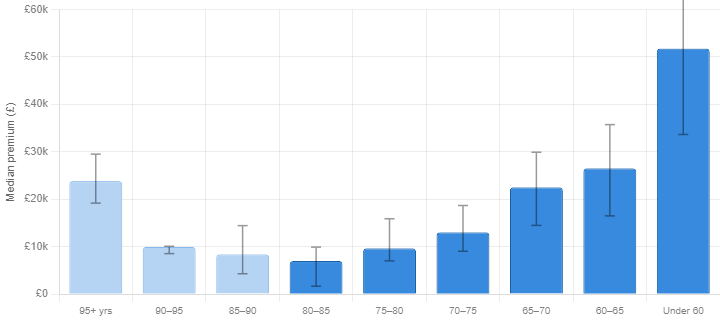
Tribunal premiums remain relatively stable above 80 years before increasing progressively as the unexpired term falls. Once marriage value becomes payable below the 80-year threshold, premiums generally increase more rapidly, although individual tribunal outcomes still depend on property value, ground rent and valuation evidence.
Why Tribunal Outcomes Vary Below 80 Years
Two leases below 80 years can look almost identical on paper and still produce very different tribunal determinations. The most common drivers across the dataset are:
- Property value. Marriage value scales directly with the underlying flat value — higher-value flats produce larger uplifts and larger premiums.
- Ground rent. The ground rent profile drives the term value the freeholder surrenders and is one of the most frequently disputed inputs in tribunal cases.
- Deferment & capitalisation rates. Small adjustments to deferment and capitalisation rates can move the determined premium materially.
- Local comparable evidence. Regional value trends and the available comparables shape what the tribunal accepts. Borough-level patterns are explored in our London borough analysis.
- Surveyor evidence. Which comparables each surveyor relies on — and how the tribunal weights them — frequently determines the final number.
Regional variation in these drivers is explored in the London borough analysis, and the choice of route — statutory versus informal — is examined in informal vs statutory lease extension. The most recent decisions feeding the dataset are tracked in latest tribunal outcomes.
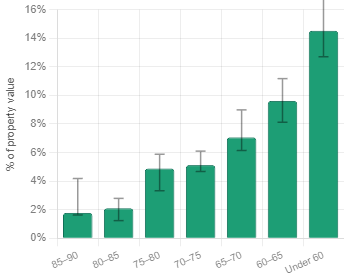
Looking at premiums as a percentage of property value provides a more meaningful comparison than considering the premium alone. Tribunal evidence shows that the cost of extending a lease generally consumes an increasing proportion of a property's value as the lease becomes shorter.

Property value remains one of the strongest drivers of lease extension premiums. While higher-value properties generally attract higher premiums, tribunal decisions demonstrate considerable variation because valuation assumptions, ground rent structures and comparable evidence also influence the outcome.
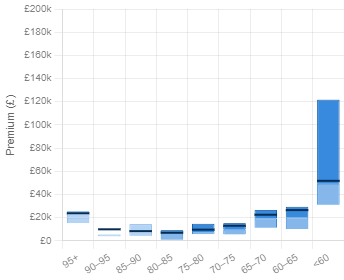
Tribunal outcomes become increasingly dispersed as lease length falls below 80 years. Similar leases can produce materially different premiums depending on the valuation evidence accepted by the tribunal, demonstrating why comparable tribunal cases are often more informative than generic calculators.
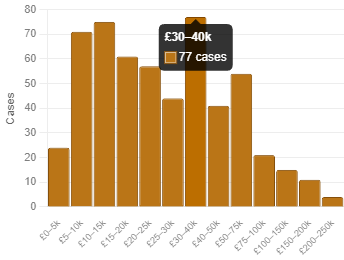
Tribunal premiums span a wide range across the dataset, reflecting the diversity of property values, lease terms and valuation evidence considered by the First-tier Tribunal. The distribution illustrates why there is rarely a single "correct" premium for every lease.
Benchmark Your Quote Against Comparable Tribunal Cases
A lease below 80 years does not automatically mean the premium is unreasonable. The most useful question is how comparable tribunal decisions have been resolved.
Reports temporarily unavailableFrequently asked questions
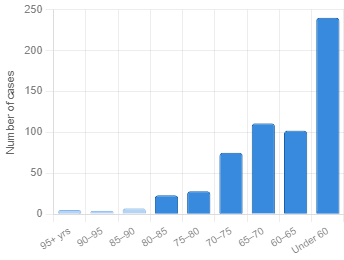
This analysis is based on 595 tribunal decisions containing sufficient lease-length and premium data. Confidence is highest in lease-length bands containing the greatest number of tribunal decisions, while bands with fewer observations should be interpreted more cautiously.
Methodology
LeaseIntel analyses published First-tier Tribunal (Property Chamber) decisions on lease extension premiums. Each decision is parsed into a structured record covering unexpired term at the valuation date, property value, ground rent profile, deferment and capitalisation rates, marriage value treatment and the final premium determined.
- Analyses only include decisions containing the specific lease-term and valuation data required for that study.
- Cases are grouped by unexpired term at the valuation date (not the date of the decision).
- Sample sizes vary between analyses because not every decision records every variable.
- Small sample groups are flagged with a confidence indicator and interpreted cautiously.
- Where decisions span multiple flats or hearings, each lease is treated as a separate observation.
Read the full LeaseIntel methodology for dataset construction, variable definitions and validation checks.
Limitations & Caveats
- Tribunal decisions represent disputed cases rather than the entire market.
- Not all decisions contain every data field.
- Sample sizes vary by analysis.
- Small sample groups should be interpreted cautiously.
Benchmark Your Quote Against Comparable Tribunal Cases
A lease below 80 years does not automatically mean the premium is unreasonable. LeaseIntel benchmarks the quote against comparable First-tier Tribunal decisions — what tribunals actually decided in similar cases.
Reports temporarily unavailableLeaseIntel is a tribunal intelligence platform. It provides information and benchmarking based on tribunal decisions and does not provide legal or valuation advice.